
Why Friend-Backed Dating Profiles Is Safer in 2026
Learn why friend-backed dating profiles are safer in 2026, how social proof lowers risk, and what to look for before you match or meet.
Online dating asks you to trust a stranger with a selfie, three prompts, and questionable punctuation, which is a lot of faith for a Tuesday night. That's the core reason why friend-backed dating profiles is safer: they add social proof from real people who know the dater offline, which can make profiles feel more accountable, more authentic, and easier to assess before you meet. If you're new to the idea, Vouched builds this directly into the dating experience, and its approach fits a broader shift toward safer, more intentional matching in 2026.
Friend-backed profiles are safer because they reduce anonymity
Friend-backed profiles are safer because they make it harder to hide behind a polished but empty self-description. Dating, in the plain sense, is about spending time together through planned social encounters to get to know each other for a romantic purpose, according to Wikipedia's overview of dating. If the goal is getting to know a real person, a profile with outside validation is simply closer to that goal.
Traditional dating profiles often rely on self-reporting alone. That leaves room for exaggeration, selective storytelling, or profiles that feel too vague to judge. The top-ranking safety content in this topic cluster repeatedly warns that anonymous profiles and private meeting pressure can raise risk, especially when someone avoids normal social context.
Key insight: Safety online often starts before the first date, at the point where you decide whether a profile seems credible.
Quick comparison table
| Profile type | Main trust signal | Safety upside | Common blind spot |
|---|---|---|---|
| Self-written only | Photos and prompts | Fast to set up | Easy to over-curate |
| Verified identity only | Platform checks | Confirms a real account | Doesn't show character |
| Friend-backed profile | Social proof from real friends | Adds accountability and context | Works best when endorsements are specific |
A friend's endorsement does not guarantee perfect behavior, obviously. People contain multitudes, and some of those multitudes still text "u up?" at 11:48 p.m. But a profile connected to real-world relationships raises the social cost of deception. That alone can filter out some bad actors and some unserious ones.
If you want the vocabulary behind this trend, read what "vouched" means in dating apps. The concept is simple: your profile is supported by people who actually know you, not just by your own marketing department, also known as your thumbs.
Social proof helps you judge character, not just chemistry
Social proof makes dating safer because it gives you another angle on a person's behavior and values. A friend-backed profile can reveal patterns that polished prompts usually miss, like reliability, kindness, communication style, or whether someone is genuinely relationship-minded.
That matters because chemistry is easy to fake for ten minutes, while character is usually visible over time. A friend endorsement does not replace your judgment, but it gives you better raw material for making one.
What useful endorsements actually tell you
- Consistency: A friend can confirm whether the profile matches the person offline.
- Values: Endorsements can point to green flags like honesty, follow-through, and respect.
- Context: They can explain quirks in a human way, which often reads more believable than self-praise.
- Intent: A thoughtful vouch suggests the dater is willing to be seen by their community, not just by strangers.
Weak endorsements are fluffy. Strong ones are specific. "He's great" says almost nothing. "She plans dates, follows through, and is kind to service staff" says much more.
That's one reason friend-backed dating also appeals to people who want a more values-based experience. If you want examples of what helpful endorsements look like, here are best examples of a friend vouching for someone in a dating profile.
Better profile signal: The more specific the third-party description, the easier it is to spot sincerity instead of performance.
Research on advanced AI systems, including the GPT-4 Technical Report and Sparks of Artificial General Intelligence: Early experiments with GPT-4, highlights how persuasive generated language can be. That does not mean every dating bio is AI-written, but in 2026 it does mean polished text alone is a weaker trust signal than it used to be. Human-backed context matters more when words are cheap and fluent words are cheaper.
Why friend-backed dating profiles is safer before the first date
Friend-backed dating profiles are safer before the first date because they improve screening and slow down impulsive trust. Most dating safety problems do not begin at the restaurant; they begin when one person ignores early signs because the profile looked charming enough.
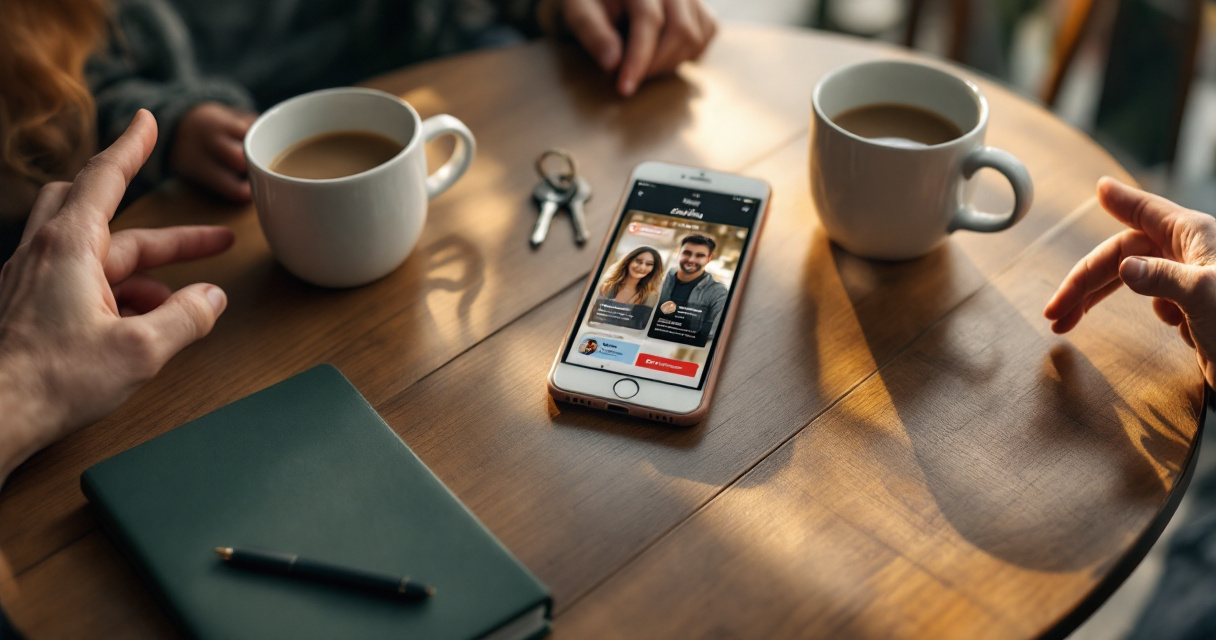
A socially backed profile gives you more to evaluate before you share your number, social handles, or location. That extra context can help you ask better questions and set better boundaries.
A simple pre-date safety checklist
- Read the friend endorsement and look for specifics, not hype.
- Check whether the profile's photos, prompts, and vouch feel consistent.
- Ask one or two values-based questions before meeting.
- Keep the first date public and time-boxed.
- Tell a friend where you're going, even if the profile looks reassuring.
Friend-backing is not magic armor. Public first dates, boundary-setting, and common sense still matter. For a broader practical checklist, see this guide to dating app safety in 2026.
One underrated benefit is that friend-backed systems can discourage profiles built for speed-running intimacy. Someone willing to be vouched for is often more open to normal pacing, and normal pacing is safer. Rushing to private meetups, isolated locations, or emotionally intense conversations early on is where many problems start, as safety-focused ranking pages in this search topic keep emphasizing.
What to watch for anyway
- Vouches that are overly generic
- Profiles with endorsements but little profile detail
- Pressure to move off-app immediately
- Requests for money, favors, or private meetings early
A green flag is not the absence of caution. It's a reason to continue with your eyes open, not closed.
How Vouched handles safer dating without making profiles feel like a background check
Vouched handles safer dating by making friend endorsement part of the profile experience, so trust-building feels social instead of clinical. That distinction matters because people want more safety, but they still want dating to feel like dating, not like applying for airport clearance.
The Vouched platform focuses on friend-backed profiles that add personal context and accountability. Instead of forcing users to do all the credibility work alone, it lets trusted people help describe who someone is. A system like that can support more intentional matching, especially for users tired of thin bios and mystery vibes.
How Vouched compares with a typical profile flow
| Experience | Typical dating app | With Vouched |
|---|---|---|
| Bio source | Self-written only | Self-description plus friend backing |
| Trust signal | Photos, prompts, chat | Photos, prompts, and social proof |
| Early screening | Mostly guesswork | More context before matching or meeting |
| Tone | Performance-heavy | More grounded and relational |
That structure also helps people who struggle to talk about themselves without sounding fake or like a LinkedIn post that discovered candles. If that's you, here's a useful guide on what it means to be vouched for by a friend on a dating profile.
One more practical point: safer matching can also save money. Better screening means fewer mismatched dates, fewer awkward exits, and fewer "I paid $18 for fries to learn he still lives emotionally in 2021" evenings. More on that idea lives at gotvouched.com, especially if you care about dating intentionally without overspending.
A 2022 IEEE Access review, A Metaverse: Taxonomy, Components, Applications, and Open Challenges, examined identity, interaction, and trust challenges in digital social spaces more broadly. Different context, same lesson: as digital relationships grow, systems that support identity cues and accountability become more useful, not less.
What safer dating profiles will likely look like next
Safer dating profiles in 2026 and beyond will likely combine identity checks, social proof, and clearer intent signals. Self-written bios are not going away, but they're becoming one layer among several, not the whole case.
You can already see the pressure points. AI makes smooth writing easier. Users want more authenticity. Safety concerns remain top-of-mind. That pushes platforms toward trust features that are legible at a glance.
Features likely to matter more next
- Friend or community validation for social accountability
- Clear dating-intent signals so users know who wants commitment, casual dating, or something in between
- More structured profile prompts that reveal behavior, not just taste
- Safer first-date norms built into app guidance
The strongest profiles will probably look less like ads and more like introductions from a well-connected friend. That's good news for people who want authentic dating, and bad news for anyone trying to cosplay as a fully formed adult for six messages.
If you want to strengthen your own profile without making it weird, start with how to ask a friend to vouch for you on a dating app. Then visit gotvouched.com to see how this approach works in practice.
Future-facing takeaway: The safest dating profiles won't rely on a single signal. They'll combine identity, context, and community-backed credibility.
Conclusion
The clearest answer to why friend-backed dating profiles is safer is simple: they add accountability where online dating often has too little. A friend's endorsement can't remove all risk, but it can reduce anonymity, improve screening, and give you a better read on who someone is before you invest time, money, or trust. If you want a dating experience built around that idea, start by reviewing your profile, ask one trusted friend for a specific endorsement, and explore more practical guides in the Vouched journal.